

Quick answer
You can see whales in Tenerife year-round: the pilot whales and bottlenose dolphins off Costa Adeje are resident, not seasonal, so sightings are possible in every month, including this summer. The main variable is the sea, which is why the best arrival window runs 09:00–14:00, when morning tours meet calmer water and clearer light for spotting.
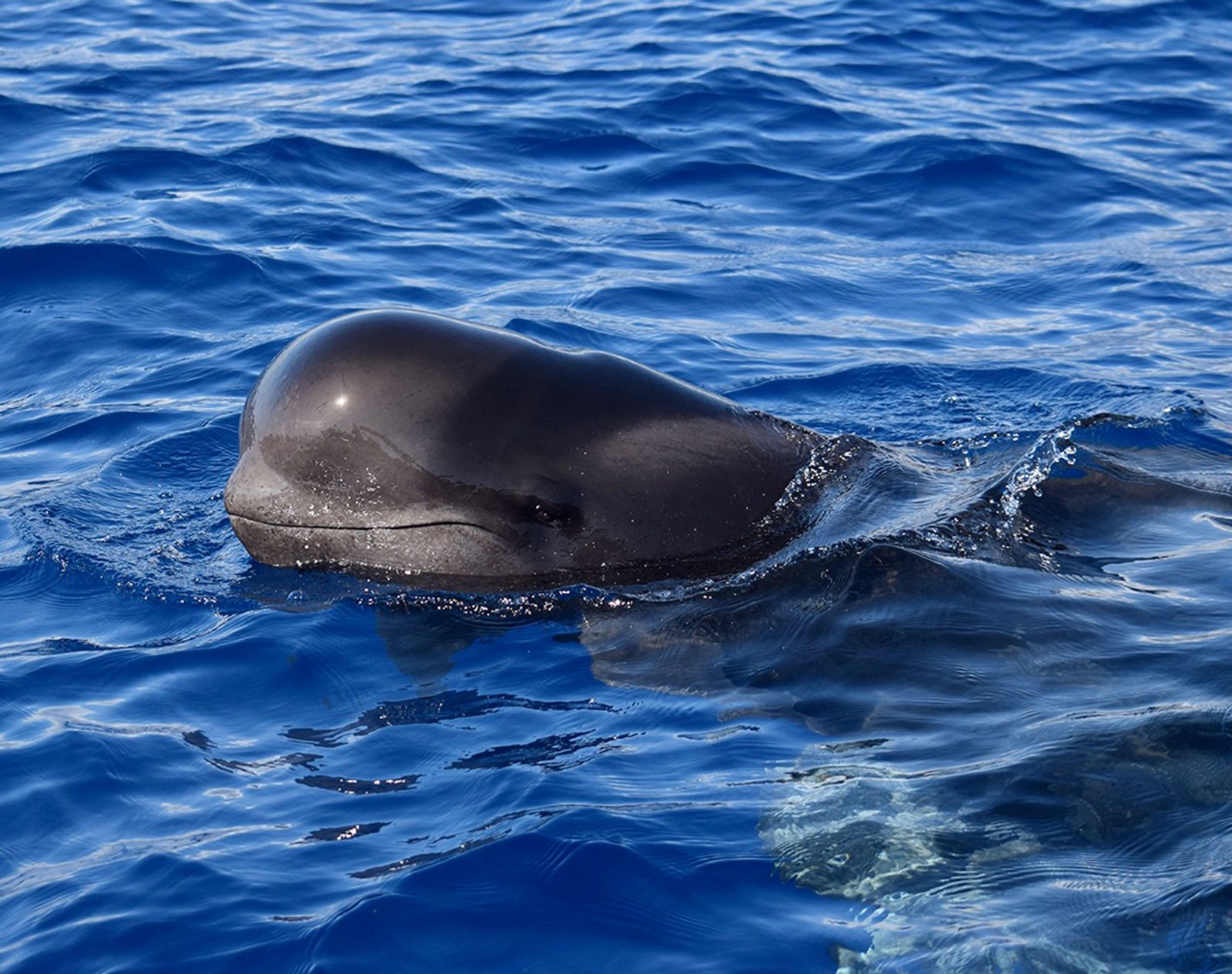
The waters off Costa Adeje hold one of Europe's few resident populations of large cetaceans, present in every month of the calendar. A colony of several hundred short-finned pilot whales lives in the deep channel between Tenerife and neighbouring La Gomera, and bottlenose dolphins work the same stretch of Atlantic year after year. That permanence is what shapes any honest answer to when can you see whales in tenerife: these animals are not migratory guests passing through, they are established residents of the sea. That biology sets the region apart from most whale-watching destinations. Elsewhere, sightings hinge on a narrow migration season, so the calendar dictates everything. Here the question shifts from which month to which morning, because sea state matters more than season. Calmer water reads more clearly, dorsal fins and spouts stand out against a flat surface, and the low light of early hours helps observers scan the horizon. Boats depart from Puerto Colón, the working marina on Avenida de Colón, where free harbour access lets visitors watch vessels come and go before committing to a trip. This resident biology also explains the variety on offer. Alongside the pilot whales and bottlenose dolphins, the deeper Atlantic occasionally carries a fin whale or a pod of Atlantic spotted dolphins through the channel, which is why local avistamiento de cetáceos trips keep logbooks that read differently week to week. Guides can rarely predict the exact roster, but they can predict the presence of the core pods. A Costa Adeje whale watching outing is therefore less a gamble on timing and more a matter of matching a boat to the conditions. The animals stay put; the weather is the variable that moves. Understanding that whales here are a fixed feature rather than a seasonal event changes how a traveller plans. Rather than chasing one peak week, visitors weigh comfort, sea conditions and how busy the harbour feels, with the specifics laid out in the sections that follow. For anyone still asking when can you see whales in tenerife, the reassuring answer is that the ocean rarely shuts the window completely, whatever the date on the ticket.
“The animals stay put; the weather is the variable that moves.”
The Peak Seasons: When Can You See Whales in Tenerife?
While resident pilot whales populate these waters year-round, the optimal window for whale watching is from November to February, when migratory baleen species travel through the region. Planning your trip during these months provides the highest diversity of marine life.
November to February
High winter holiday attendanceMild winds, 19°C to 23°C
This period offers the highest diversity of marine life, including migrating baleen species like humpback and fin whales. Resident pilot whales remain highly active in the channel.
March to May
Moderate passenger numbersCalm seas, 20°C to 24°C
Resident pilot whales and bottlenose dolphins are spotted regularly, with occasional sightings of passing sperm whales. Mild spring temperatures make for comfortable sailing.
June to October
Peak summer, quieter autumnWarm seas, 22°C to 30°C
Warm waters provide excellent visibility for observing resident pilot whales and newborn calves. Migratory species are rarely present during these warmer months.
Weekday mornings
Lower volume of tour passengers—
Arriving during the best window of 09:00 to 14:00 offers calmer sea conditions and better light for whale spotting. Booking mid-week helps avoid the weekend rush at the marina.
Verdict: For the calmest sea conditions and the highest species variety, the best slot is Tuesday to Thursday during the 09:00 to 14:00 arrival window from November to February.
Daily Departure Schedules: When Can You See Whales in Tenerife?
Puerto Colón Marina in Costa Adeje remains open twenty-four hours a day, seven days a week. However, active whale watching excursions are restricted to daylight hours, with most charter boats scheduling their departures between 09:00 and 16:00 daily.
| Monday | 00:00–23:59 | Excursions depart during daylight hours |
|---|---|---|
| Tuesday | 00:00–23:59 | Excursions depart during daylight hours |
| Wednesday | 00:00–23:59 | Excursions depart during daylight hours |
| Thursday | 00:00–23:59 | Excursions depart during daylight hours |
| Friday | 00:00–23:59 | Excursions depart during daylight hours |
| Saturday | 00:00–23:59 | Excursions depart during daylight hours |
| Sunday | 00:00–23:59 | Excursions depart during daylight hours |
Daily facility schedules do not change throughout the year, but individual boat operators may adjust or reduce their late afternoon departures during winter months to align with earlier sunset times.
Admission Fees and Tour Pricing: When Can You See Whales in Tenerife?
While walking through the Puerto Colón marina is entirely free of charge, the cost to see whales depends on the specific boat excursion you choose. Tour pricing varies based on the duration of the trip, vessel type, and included services.
A typical adult pays approximately 40 EUR for a standard excursion, with the price varying based on the duration and type of vessel selected.
Transit Directions to Puerto Colón Marina in Costa Adeje
Puerto Colón Marina is situated at Avenida de Colón in Costa Adeje, along the southwestern coast of Tenerife. The harbor is easily accessed by taking the TF-1 motorway or utilizing local bus routes that stop nearby.
TITSA Line 40 from Tenerife South Airport to Estación Costa Adeje
TITSA Line 467 or 473 from Los Cristianos to San Eugenio stop
TF-1 motorway to Exit 74, then Avenida de Colón
Walk south from Estación Costa Adeje via Avenida de los Pueblos
Cab from Tenerife South Airport directly to the marina
Common Tourist Pitfalls: Mistakes to Avoid During Your Excursion
A few avoidable errors can undercut a whale-watching trip from Puerto Colón. Knowing them in advance keeps your excursion on track.
Booking a boat without 'Blue Boat' (Barco Azul) certification
Choose an operator displaying the official 'Barco Azul' flag, which marks licensed vessels that follow the regulated distance and conduct rules for approaching cetaceans.
Assuming the sea stays calm all afternoon
Wind and swell often build after midday; book earlier in the day for steadier conditions and treat afternoon slots as weather-dependent.
Leaving warm layers behind on a hot day
Bring a windproof jacket or fleece; the breeze offshore feels noticeably cooler than on land, even in summer.
Turning up without a confirmed reservation
Reserve your tour ahead through the site's booking pages rather than relying on walk-up spots, which fill quickly in peak periods.
Skipping seasickness precautions
Take motion-sickness tablets before boarding if you are prone to it, and keep your eyes on the horizon once underway.
Bringing no sun protection for the open deck
Pack a hat, sunglasses and water-resistant sunscreen; shade is limited and reflection off the water intensifies exposure.
Expert Advice for Spotting Pilot Whales and Dolphins in Tenerife
Maximize your chances of successful wildlife encounters in the waters off Costa Adeje with these practical preparation and spotting guidelines.
Choose rigid inflatable boats
Smaller rigid inflatable boats sit lower in the water, providing a closer view of pilot whales without disturbing them. These eco-certified vessels navigate faster and generate less noise than large catamarans.
Wear polarized sunglasses
Polarized lenses block glare from the ocean surface, making it easier to track underwater silhouettes of dolphins and whales before they surface. This helps you spot marine life earlier than with standard lenses.
Manage seasickness before boarding
Take motion sickness medication at least one hour before leaving Puerto Colón, as the Atlantic swells can be unpredictable. Avoid heavy meals and sit near the center of the boat where movement is minimal.
Watch for hovering seabirds
Scan the horizon for groups of Cory's shearwaters hovering close to the water. These birds feed on the same baitfish as dolphins, often indicating an active pod just below the surface.
Adjust camera shutter speeds
Set your camera to a fast shutter speed of at least 1/1000 seconds to capture fast-moving dolphins and water splashes. Use a polarizing filter to reduce surface glare from the intense Canary Island sun.
Bring windproof layers
Even on warm days, temperatures drop significantly when the boat accelerates into open water. A light windbreaker protects against sea spray and sudden ocean breezes.
Check availability
FAQ on when can you see whales in tenerife
Everything you need to know about when can you see whales in tenerife