
Quick answer
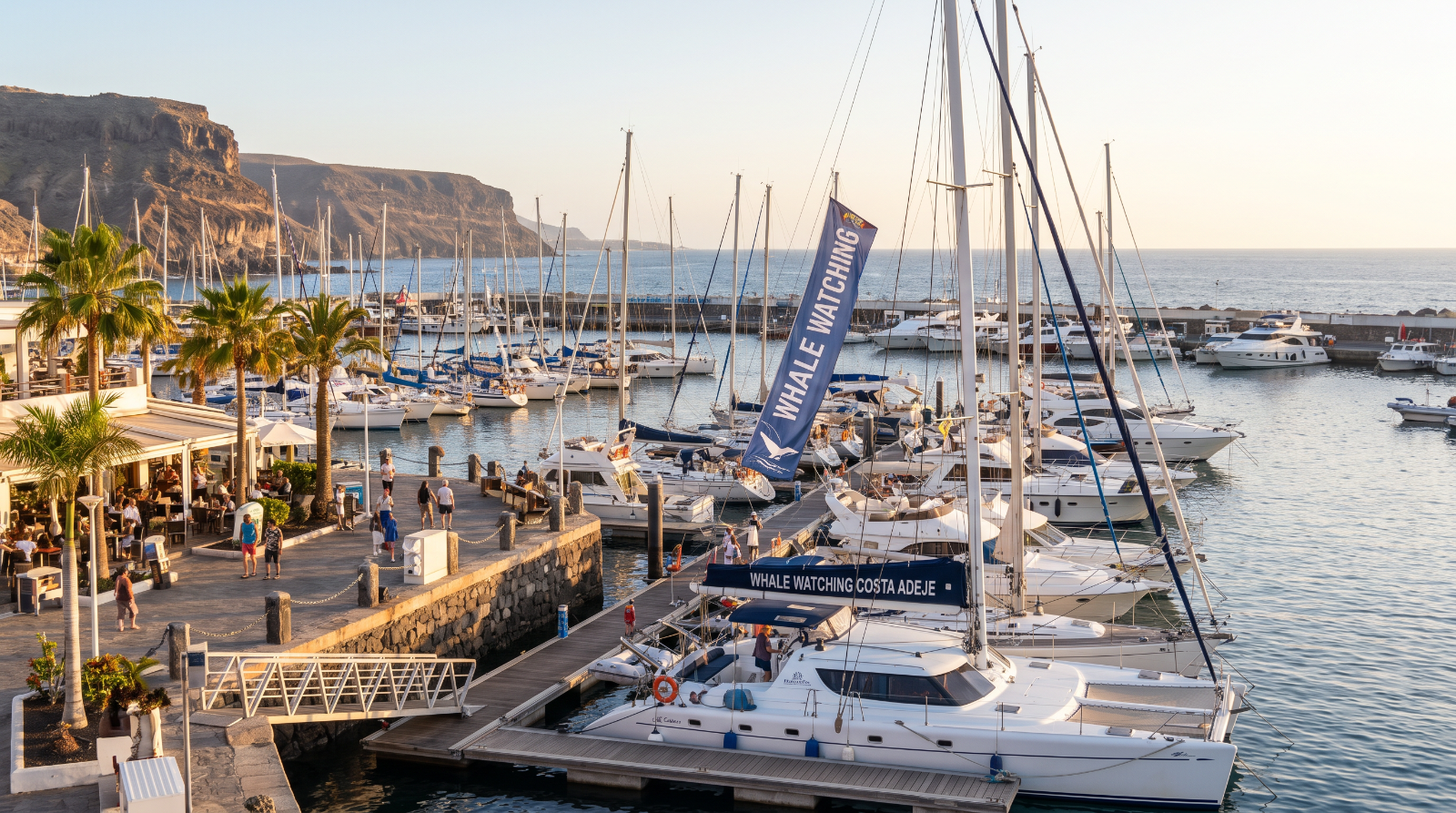
Whale watching from Costa Adeje departs from Puerto Colón, a marina on Avenida de Colón where entry is free (0 EUR) and boat tours are booked separately. The harbour is open 24 hours a day, seven days a week, so the trips run on operator schedules rather than gate times. Resident pilot whales make sightings dependable year-round.
The waters off Costa Adeje sit above one of Europe's most reliable cetacean grounds, a stretch of the Atlantic where short-finned pilot whales hold station within a few nautical miles of the coast. Whale watching from Costa Adeje starts at Puerto Colón, the working marina on Avenida de Colón that serves as the departure quay for the licensed vessels operating along this shoreline. Most visitors are surprised to learn the animals are resident, not migratory, which is why boats find them across the calendar rather than in a narrow window. The channel here plunges quickly to depths that suit these squid-hunting whales, which is part of why the population stays put. What the reader is really facing is a logistics decision, not a wildlife gamble. The marina charges nothing to enter and its gates stay open at all hours, so the choices that shape the day are which craft to board and how far offshore it ranges. A small sailing catamaran offers a quiet, slow approach; a larger motor vessel covers more of the deep channel toward La Gomera. Costa Adeje whale watching tours share the same feeding grounds, so the difference lies in comfort, group size and how long the boat lingers once a pod surfaces. That framing helps because Puerto Colón can feel crowded at first glance, with dozens of berths and touts working the pontoons. The useful mental model is simple: the harbour is free public space, and the actual product is the boat trip booked separately from a licensed operator. Signage points toward the ticket kiosks, but the calmer route is to arrive already knowing which sailing you want. Reading the vessel details before arriving saves the reader from deciding under pressure at the quayside. Anyone comparing boat trips from Puerto Colón should weigh licensing, capacity and departure frequency rather than headline claims. The marina's role is fixed and free; everything meaningful happens on the water. Approached this way, planning whale watching from Costa Adeje becomes a short, clear set of decisions rather than a source of confusion, and the reader can move straight to the booking pages knowing what separates one Atlantic sailing from the next.
“The harbour is free public space; the real experience is the boat trip, booked separately from a licensed operator.”
Choosing the Best Time for Whale Watching from Costa Adeje
The best arrival window for whale watching from Costa Adeje is between 09:00 and 13:00, when calmer morning seas and lighter winds provide optimal visibility.
Winter (December to February)
High volume during holiday periodsMild, averages of 18°C to 22°C
Migratory baleen whales pass through the deep channel during these months. Mornings offer the most stable sea conditions for spotting.
Spring and Autumn
Moderate tourist numbersPleasant, averages of 20°C to 25°C
These transition months offer active marine life and fewer vessels on the water. Morning departures remain the most reliable choice for clear sightings.
Weekday mornings
Fewer day-trippers and tour groups—
Scheduling your departure early in the day avoids the stronger afternoon winds. This timing aligns with the peak visibility window for resident species.
Verdict: The optimal time to book a tour is a weekday morning between 09:00 and 13:00 during the spring or autumn shoulder seasons.
How to Reach Puerto Colón for Whale Watching from Costa Adeje
Puerto Colón is situated at Avenida de Colón in the heart of Costa Adeje, making it easily reachable from local resort areas. Walking along the coastal promenade or taking a short taxi ride are the most straightforward ways to access the docks.
TITSA Line 467 to San Eugenio stop
TF-1 motorway to Avenida de Colón
Coastal promenade to Avenida de Colón
Local resort roads to Puerto Colón
What to Expect: A Typical Itinerary for Whale Watching from Costa Adeje
This plan suits first-time visitors booking a standard boat trip from Puerto Colón, mapping out a typical 3-hour cruise from boarding to return, with notes on the longer 4.5-hour option.
Boarding at the pontoon
Arrive at your assigned Puerto Colón pontoon around 20 minutes before departure for the crew safety briefing and to find a seat. Boarding usually takes 10 to 15 minutes.
Leaving the marina
The boat eases out past the breakwater and turns southwest toward open water. The first 15 minutes are slow while the skipper clears the harbour zone.
Searching the Teno-Rasca strip
The vessel tracks the sheltered waters off the Teno-Rasca coast, where crews scan the surface during a slow cruise. Expect roughly 60 to 90 minutes of steady searching and watching.
Swimming and drift stop
On calm days the skipper anchors in a quiet cove for a supervised swim or a drift stop, lasting around 20 to 30 minutes. Not every trip includes this, so confirm when booking.
Return leg to Puerto Colón
The boat heads back along the coast, giving a second chance for sightings on the way in. The return typically takes 25 to 30 minutes.
Disembarking
You dock back at the same pontoon and step off within a few minutes. Extended 4.5-hour routes follow the same rhythm but push further along the coastline with a longer stop and more searching time.
Marine Life Facts: Species Spotted on Whale Watching from Costa Adeje
The waters off Costa Adeje are globally recognized for their rich biodiversity and protected habitats. As part of a protected marine strip, this region serves as a sanctuary for diverse cetacean species.
January 2021
The World Cetacean Alliance declared the Tenerife-La Gomera marine area, including Costa Adeje, as Europe's first Whale Heritage Site. This designation highlights the community's commitment to responsible marine tourism and habitat protection.
22 kilometres
The Teno-Rasca Special Area of Conservation (ZEC) encompasses a 22-kilometre stretch of the southwestern coastline. This protected marine sanctuary shields vulnerable underwater habitats from heavy maritime activities.
636 pilot whales
Researchers have cataloged 636 individual short-finned pilot whales using unique markings on their dorsal fins. These resident populations live in stable family units called pods off the Adeje coast.
2 resident species
Common bottlenose dolphins and short-finned pilot whales reside permanently in these waters year-round. Tourists can observe their natural behaviors without relying on seasonal migration periods.
1,000 metres
The volcanic shelf off Costa Adeje drops sharply to depths of over 1,000 meters. This unique underwater structure creates a sheltered environment where pilot whales dive to hunt for deep-sea squid.
21 migratory species
An additional 21 cetacean species use the deep channel as a migration corridor throughout the year. Visitors can encounter seasonal travelers such as baleen whales, sperm whales, and common dolphins.
80 kilograms
The Atlantic spotted dolphin grows to a weight of 80 kilograms and is the third most frequently observed species. They are highly active and often travel in large, energetic pods alongside boats.
September 2011
The Spanish government officially designated the Teno-Rasca Marine Strip as a Special Area of Conservation. This legal framework protects the marine caves, sandbanks, and seagrass meadows that sustain the local food chain.
Crucial Mistakes to Avoid on Tenerife Boat Tours
Two errors spoil more Costa Adeje boat trips than any other: booking with unregulated operators and boarding an afternoon sail unprepared for choppier water. Both are avoidable once you know what to check.
Booking a boat without the official Blue Boat flag
Confirm the operator carries the 'Barco Azul' (Blue Boat) environmental flag, which certifies they follow legal distance and conduct rules around cetaceans. Reputable tours listed here hold that accreditation.
Assuming every marina operator is licensed
Not all boats at Puerto Colón are authorised for cetacean watching. Verify licensing before you commit, and book through the site's listed tours to avoid unregulated operators.
Ignoring motion sickness before a windier afternoon sail
Take a motion-sickness tablet 30–60 minutes before boarding, and choose a calmer departure if you are prone to seasickness. Afternoon winds make the water rougher.
Turning up expecting to board without a reservation
Boat tours must be booked separately from marina entry. Reserve your place in advance through the booking pages rather than relying on walk-up availability.
Skipping the operator's cancellation and weather policy
Read the operator's terms before booking so you know how sailings are handled if wind or sea conditions force a change.
Pre-Departure Preparation and Packing Checklist
Sort your booking and pack a few sea-specific items before you head to Puerto Colón.
-
Book your tour online in advance — Marina entry is free, but boat trips must be reserved separately through the site's booking pages.
-
Take motion sickness medication early — Swallow it 30-60 minutes before departure so it works once the boat is moving.
-
Pack a light windbreaker — Sea breezes feel cooler offshore than on land, even on warm days.
-
Bring swimwear and a towel — Some tours include a swim stop, so wear or carry a suit under your clothes.
-
Apply reef-safe sunscreen — Open-water glare intensifies UV exposure and reef-safe formulas protect the marine environment.
-
Wear flat, non-slip shoes — Wet decks get slippery, and grippy soles keep you steady onboard.
-
Carry ID and your booking confirmation — Operators may check names against the passenger list before boarding.
Things to Do Near Puerto Colón Marina
After your boat excursion, you can explore the variety of beaches and seaside pathways located directly adjacent to the marina. These coastal spots offer dining and relaxation options that easily fill out a full day in Costa Adeje.
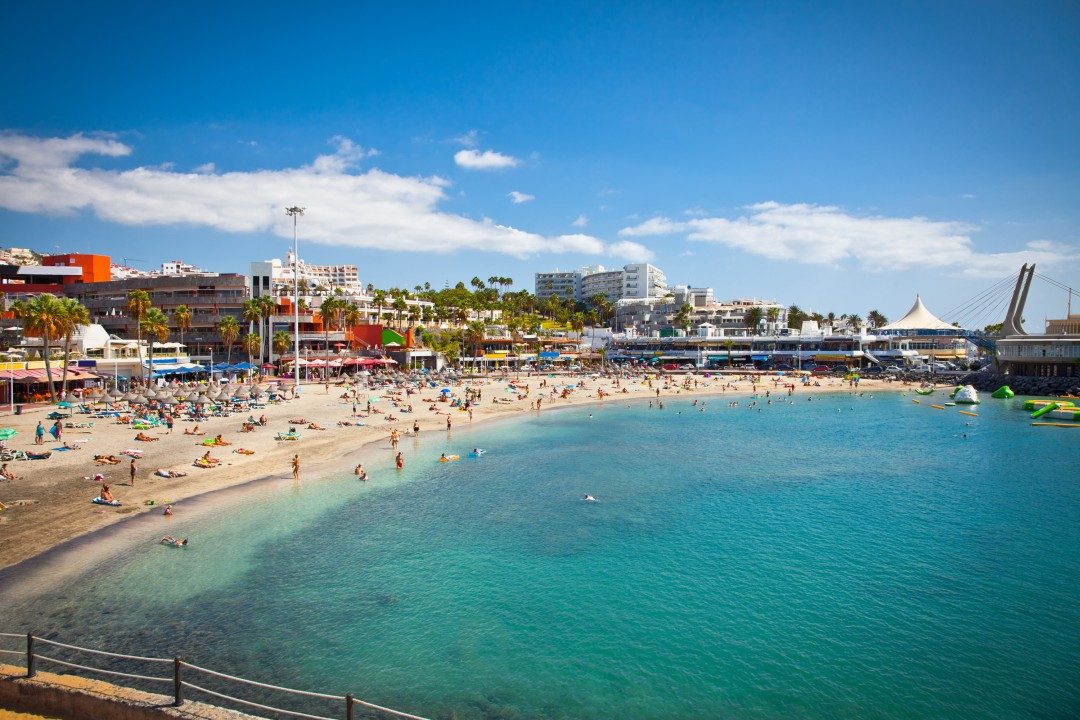
Playa de la Pinta
Directly adjacent to the northern breakwater of the marina, this sheltered sandy cove features calm waters protected by the port wall, making it a convenient spot to relax before or after your boat tour.
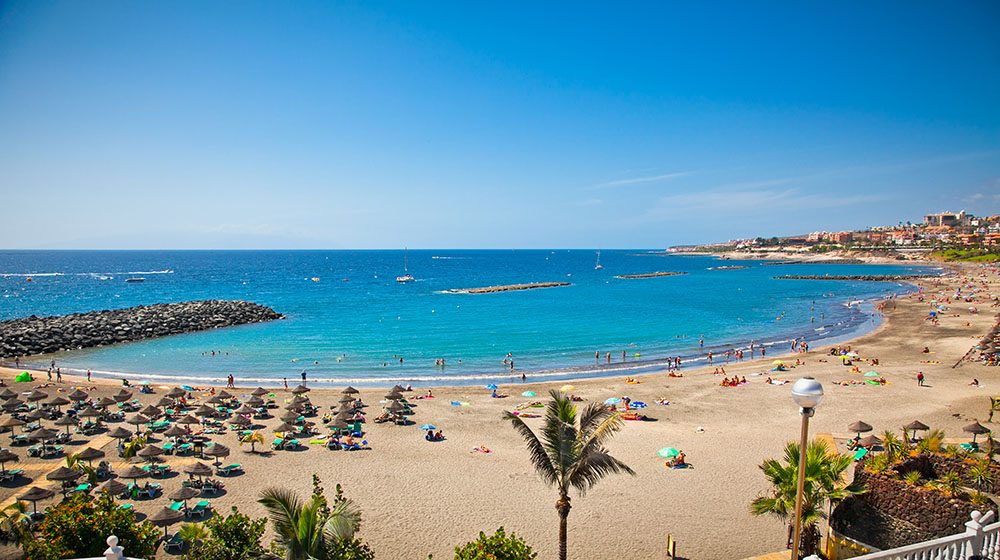
Playa de Torviscas
Located just north of Playa de la Pinta, this wider beach has dark volcanic sand and a lively atmosphere with inflatable water games, perfect for extending your coastal day out.
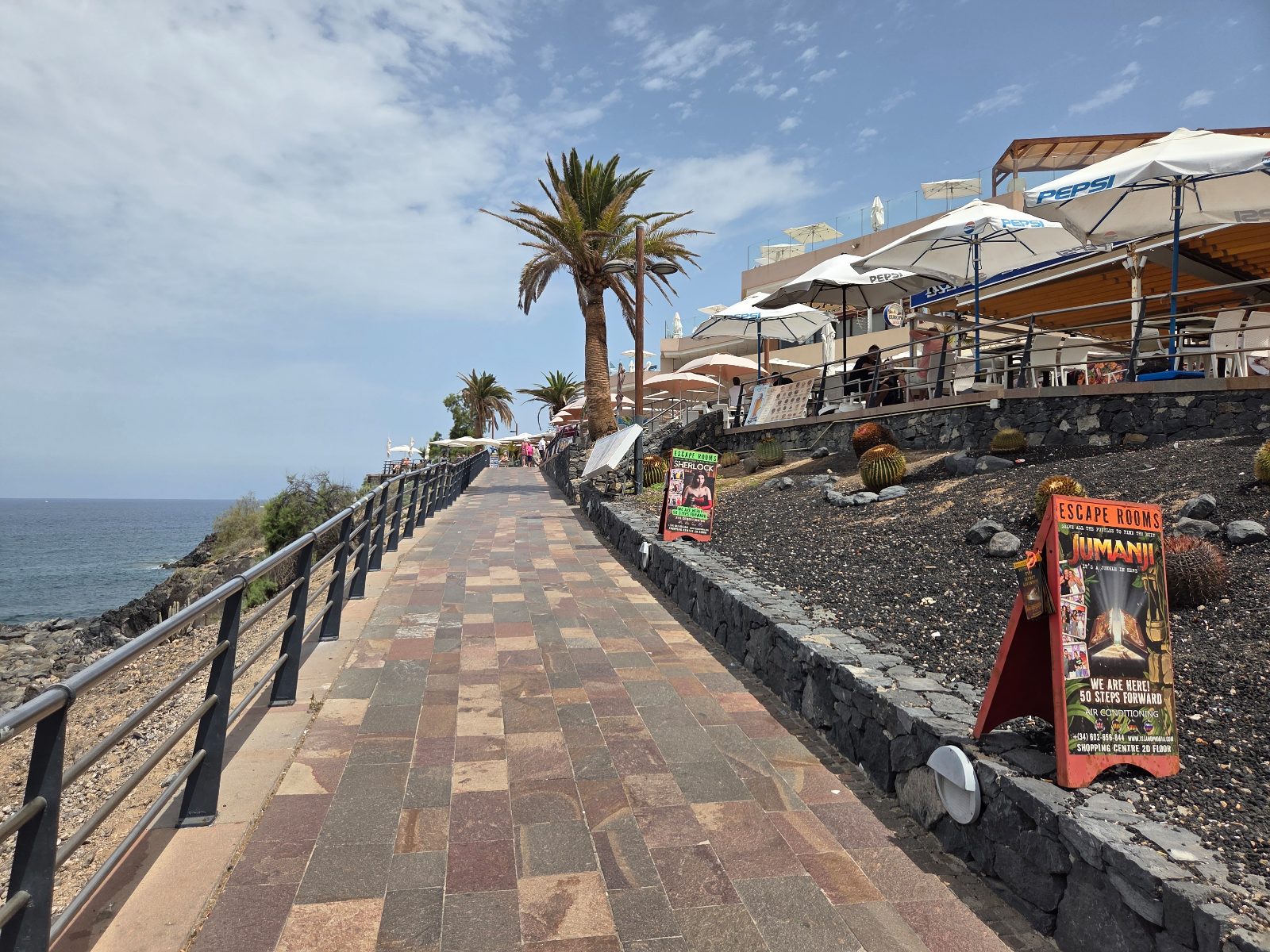
Puerto Colón Promenade
This bustling seaside pathway links the docks directly with a variety of restaurants, cafes, and shops, letting you grab a quick bite or browse souvenirs before boarding.
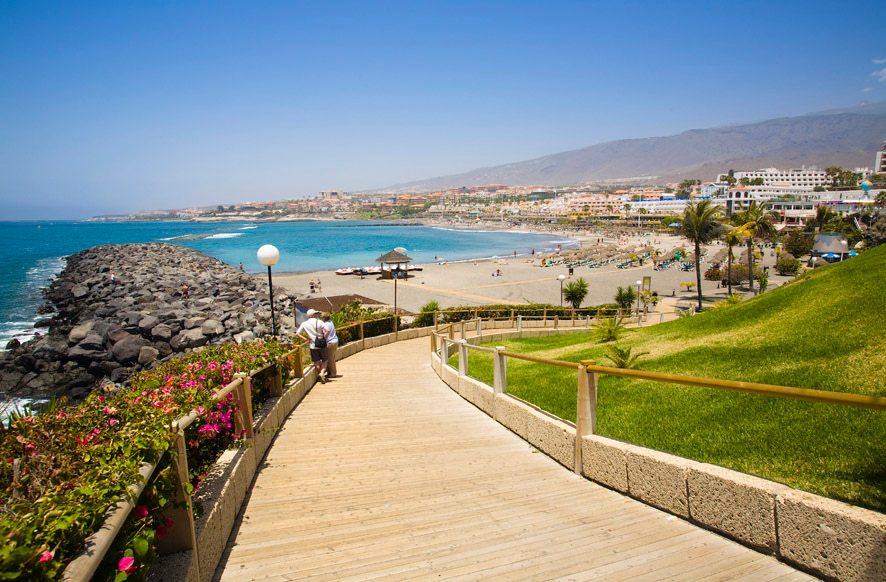
Playa de Fañabé
Further up the coast, this large golden-sand beach offers sun loungers, beach bars, and water sports like jet skiing, serving as a lively continuation of the local shorefront.
Check availability
FAQ about whale watching from costa adeje
Everything you need to know about whale watching from costa adeje